
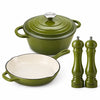
Cast iron cooks wonderfully evenly, but it does require a little love. Read here how to clean, protect, and enjoy your enamelled cast iron pan in the kitchen for years to come.
Cast iron has been a chef’s favorite material for centuries, and for good reason: it heats evenly, retains heat for a long time, and with proper care, it lasts for years. In this article, we explain the best way to clean and maintain your cast iron pan, such as an enameled skillet or Dutch oven.
Enameled cast iron versus bare cast iron
There are two types of cast iron pans. Bare cast iron has an open, dark surface that you must regularly season: heating a thin layer of oil to create a protective patina. Enameled cast iron, by contrast, has a glaze layer that protects the pan against rust and acidity. You never need to season that layer, which makes maintenance a lot simpler. Do keep in mind that enamel can be vulnerable to shocks and sudden temperature changes.
Step 1: let the pan cool down before washing it
Cast iron retains heat for a long time. Therefore, never put a hot pan under a cold tap: the sudden temperature difference can cause the enamel to crack or chip. Let the pan cool down slowly on a thermally neutral surface first, such as a turned-off stovetop or a trivet.
Step 2: clean with warm water and mild soap
For enameled cast iron, the rule is: wash with warm water, a mild dish soap, and a soft sponge or brush. For caked-on residue, let it soak in warm soapy water for fifteen minutes first. If something is really stuck, fill the pan with a little water, bring it to a boil, and gently scrape it loose with a wooden or silicone spatula. Avoid steel wool and abrasive cleaners, as they can dull the enamel.

Step 3: dry thoroughly and store dry
Although enameled cast iron does not rust easily, the exposed edges and the cast iron handle are vulnerable. Therefore, always dry your pan well with a cloth after washing and let it air dry for a moment before putting it away. Do not store pans stacked without a protective cloth in between, so that they do not damage each other.
Things you should avoid
- Shocks and drops: enamel is hard, but it can crack if a pan falls hard or bumps against a surface.
- Sudden temperature changes: going from a hot stovetop directly to cold water is the primary culprit for broken enamel.
- Metal spatulas and cutting in the pan: use wooden or silicone kitchen utensils to prevent scratches in the enamel.
- Overheating while empty on the stovetop: do not leave an empty pan on the highest setting for a long time.
- Harsh cleaning agents and steel wool: these will damage the glaze.
What to do with caked-on edges or brown spots?
Dark discolorations on the inside are not rust, but a patina of caramelization and cooking residue. You can leave these partially or remove them with a paste of baking soda and water: apply the paste to the spot, let it soak in for a while, and then gently rub it away with a damp sponge. For stubborn burnt-on residue, let a cup of water with a tablespoon of baking soda simmer gently in the pan, after which you can loosen the residue with a spatula.
Ready to cook with cast iron yourself?
With this maintenance, your cast iron pan will keep its beautiful appearance and cooking performance for years. Are you still looking for a pan that is loved on all stovetops, in the oven, and on the table? Take a look at the enameled cast iron pan sets from Hage in our webshop: from compact skillets to generous 5-liter Dutch ovens, in various colors that are fun to use and to leave out.
Tags
Blog posts
-

Which headscarf suits you? Fabrics, styles, and styling tips
Which headscarf suits you? Fabrics, styles, and styling tips -

Cleaning and storing a tagine: how to keep your earthenware in top condition
Cleaning and storing a tagine: how to keep your earthenware in top condition -

Chicken with lemon and olives from the tagine: a simple recipe for beginners
Chicken with lemon and olives from the tagine: a simple recipe for beginners


★★★★★
9.1
|


